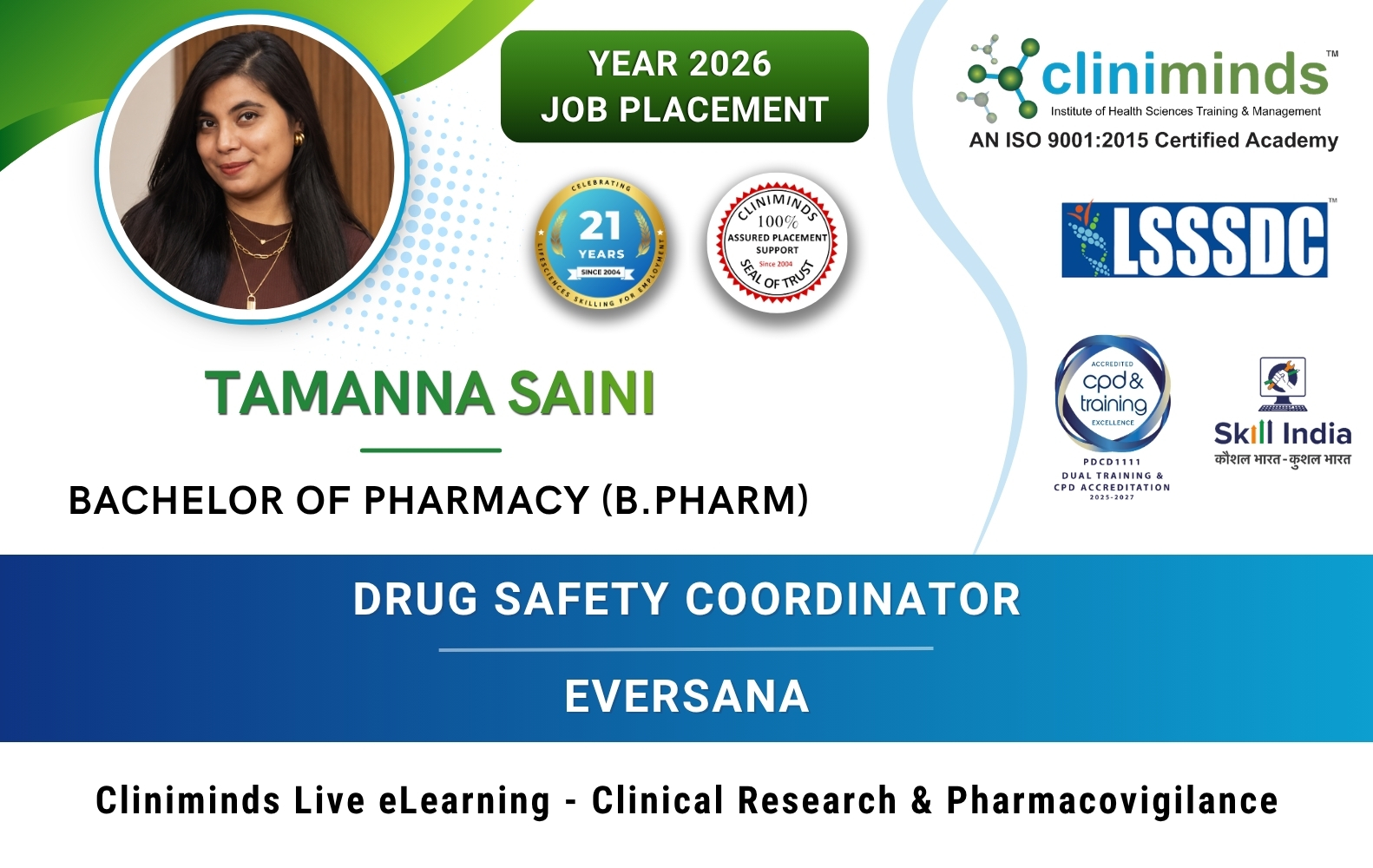
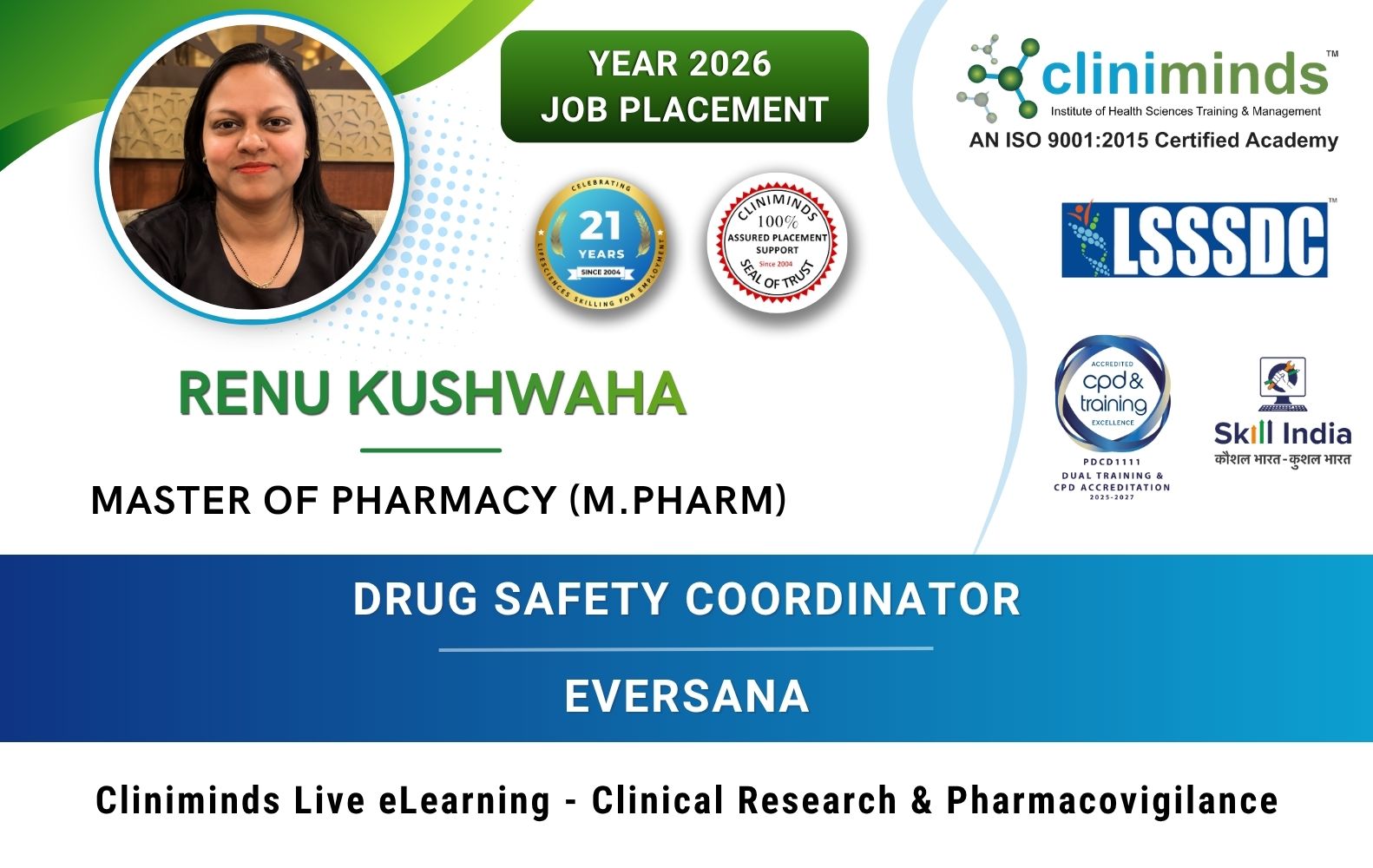
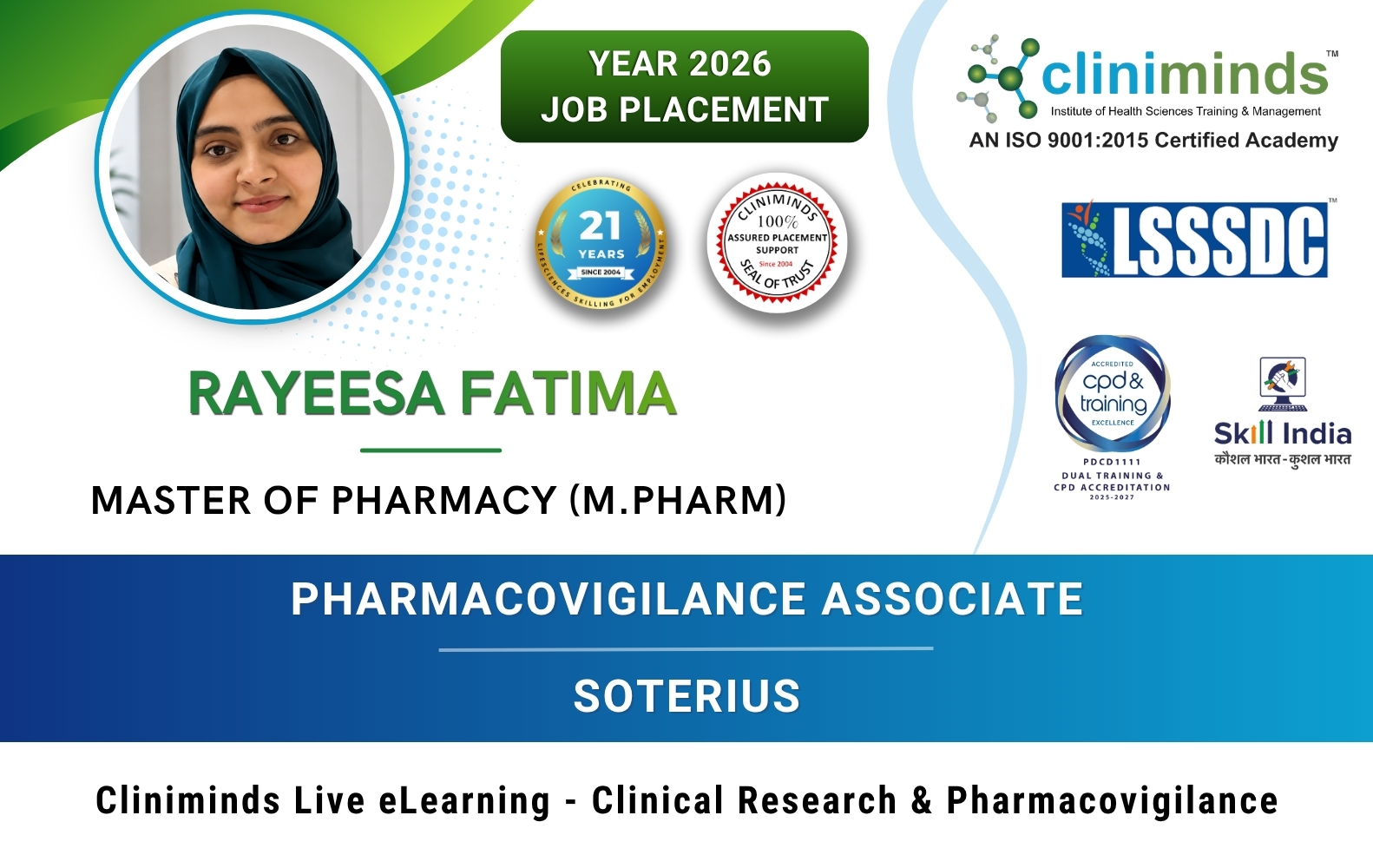
Free Add On Clinical Data Management / Pharmacovigilance with All Live eLearning Programs
Pharmacovigilance Course Online with Placement Support

Pharmacovigilance Training Programs by Cliniminds are designed for pharmacy, medical and life sciences graduates who want to build careers in Drug Safety and Healthcare industries. Students learn adverse event reporting, case processing, safety database management, signal detection, regulatory guidelines and global pharmacovigilance practices.
Who Can Join Pharmacovigilance Courses?
Eligible learners:
- B.Pharm & M.Pharm Graduates
- Pharm.D Students
- B.Sc / M.Sc Life Sciences Students
- Biotechnology & Microbiology Graduates
- MBBS, BDS, BHMS, BAMS Graduates
- Nursing Professionals
- Healthcare Professionals
Career Opportunities After Pharmacovigilance Course
Career Roles:
- Drug Safety Associate
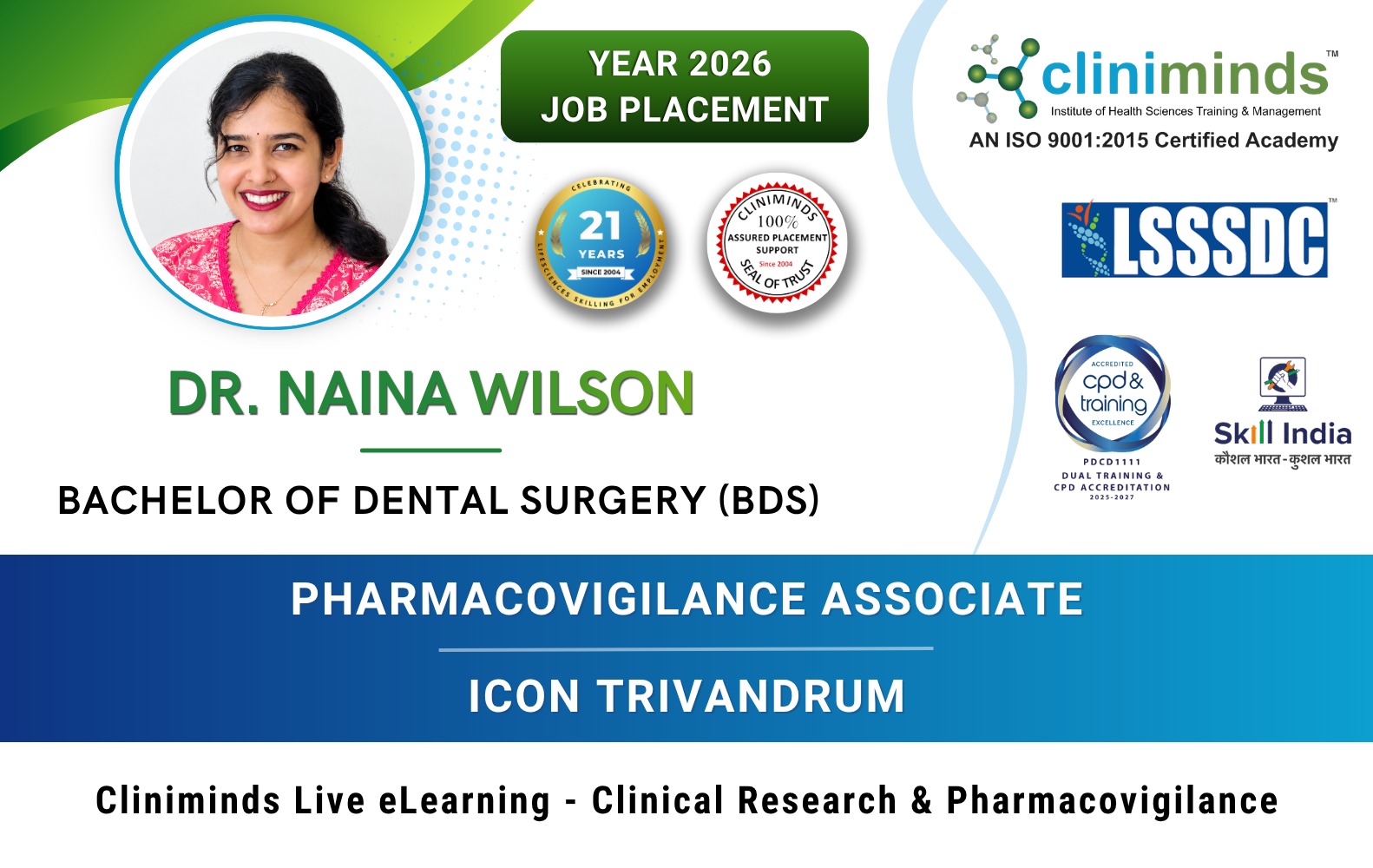
- Pharmacovigilance Associate
- Case Processing Associate
- Medical Reviewer
- Safety Data Analyst
- Aggregate Report Specialist
- Signal Management Associate
- Regulatory Safety Associate
Why Choose Cliniminds for Pharmacovigilance Training?
- Industry Relevant Curriculum
- Experienced Industry Trainers
- Live Online Classes
- Practical Case Studies
- Placement Assistance
- Career Guidance Support
- Pharma Industry Focused Training
Learning Mode
- Live eLearning Online Classes
- Interactive Sessions
- Practical Assignments
- Case Study Based Learning
- Online Learning Support
Companies Hiring Pharmacovigilance Professionals
Names are for industry awareness.
- IQVIA
- Accenture Life Sciences
- Parexel
- ICON plc
- Syneos Health
- Labcorp Drug Development
- Cognizant Life Sciences
- TCS Life Sciences
- Pfizer
- Novartis
- Sun Pharma
- Dr. Reddy’s Laboratories
Frequently Asked Questions (FAQs)
Q1. What is Pharmacovigilance?
Answer: Pharmacovigilance is the science of detecting, assessing, understanding, and preventing adverse effects or any other medicine-related problems. It plays a vital role in ensuring patient safety by monitoring the safety of pharmaceutical products throughout their lifecycle. Pharmacovigilance professionals work closely with pharmaceutical companies, regulatory authorities, CROs, and healthcare organizations to ensure medicines remain safe and effective for public use.
Q2. Who can join Pharmacovigilance courses?
Answer: Pharmacovigilance courses are suitable for graduates and postgraduates from Pharmacy, Life Sciences, Biotechnology, Medicine, Dentistry, Nursing, Ayurveda, Veterinary Sciences, and other healthcare disciplines. Fresh graduates looking to build a career in the pharmaceutical industry, as well as working professionals seeking career advancement, can also enroll to develop industry-relevant knowledge and practical skills.
Q3. Is Pharmacovigilance a good career?
Answer: Yes, Pharmacovigilance is one of the fastest-growing career domains in the Life Sciences industry due to increasing global regulatory requirements and drug safety monitoring. Qualified professionals are in demand across pharmaceutical companies, biotechnology organizations, CROs, and healthcare firms. The field offers long-term career growth, international opportunities, and diverse job roles in drug safety and regulatory compliance.
Q4. What jobs are available after Pharmacovigilance?
Answer: After completing a Pharmacovigilance course, candidates can explore roles such as Drug Safety Associate, Pharmacovigilance Associate, Case Processing Executive, Medical Reviewer, Aggregate Report Writer, Signal Detection Associate, Safety Scientist, and Drug Safety Specialist. These opportunities are available in pharmaceutical companies, CROs, biotechnology firms, and healthcare organizations across India and globally.
Q5. Can freshers enter Pharmacovigilance?
Answer: Yes. Fresh graduates can start their careers in Pharmacovigilance by acquiring industry-oriented training and practical knowledge. A structured professional course helps learners understand adverse event reporting, ICSR processing, global pharmacovigilance regulations, and drug safety workflows, making them better prepared for entry-level opportunities in the pharmaceutical and healthcare sectors.
Q6. What skills are required for a career in Pharmacovigilance?
Answer: A successful Pharmacovigilance professional requires knowledge of adverse event case processing, medical terminology, drug safety regulations, ICH and GVP guidelines, medical review, documentation, and communication skills. Practical exposure to industry processes, regulatory compliance, and pharmacovigilance software further improves employability and career prospects.
Q7. Is Pharmacovigilance training available online?
Answer: Yes. Cliniminds offers Live Online eLearning Pharmacovigilance courses led by experienced industry experts. Students can attend interactive live sessions, participate in assignments and case studies, and receive continuous academic support from anywhere. The flexible learning format is suitable for both students and working professionals.
Q8. Which companies hire Pharmacovigilance professionals?
Answer: Pharmacovigilance professionals are recruited by leading pharmaceutical companies, Contract Research Organizations (CROs), biotechnology companies, healthcare organizations, medical device companies, and regulatory consulting firms. The growing focus on drug safety and patient protection has created excellent career opportunities both in India and internationally.
Q9. Does the Pharmacovigilance course provide practical training?
Answer: Yes. Cliniminds emphasizes practical, industry-oriented learning through real-world case studies, assignments, regulatory documentation, and exposure to Pharmacovigilance workflows. Students gain hands-on understanding of drug safety processes, helping them build confidence and become job-ready for the pharmaceutical and Life Sciences industry.
Q10. Does Cliniminds provide placement support?
Answer: Yes. Cliniminds has a dedicated Placement Support that helps eligible students prepare for careers in the Life Sciences industry through resume building, mock interviews, career counselling, employability training, and recruiter interactions. Students also receive guidance on interview preparation and access to job opportunities from leading pharmaceutical companies, CROs, biotechnology firms, and healthcare organizations.